A Brave New World
An AI agent builds a factory in Builderment without ever touching the running game. It only edits the save file. I load the world, play it, tap UNLOCK on research, and close it again.
- Dates
- 10–15 Nov 2026
- Agent
- Claude Code
- Worlds
- 1 → 10
- Goal
- Earth Tokens
- Status
- In progress
Sheet 01 The setup
Builderment is a factory game: extractors on ore, belts, furnaces, workshops, and a research lab that eats what you send it. The long goal is Earth Tokens. The near goal turned out to be iron gears, lots of them, because gears pay for belt speed.
The first attempts drove the game live, with a camera model and click placement tests. Those got to 26 out of 26 placements exactly right, but it was fragile. So the line got drawn: the agent works only through saved files.
- Never launch, click, type in or screenshot the game.
- Never overwrite the original world. Every change goes into a new copy, with a backup.
- Write only while the game is closed.
Sheet 02 Reading the save
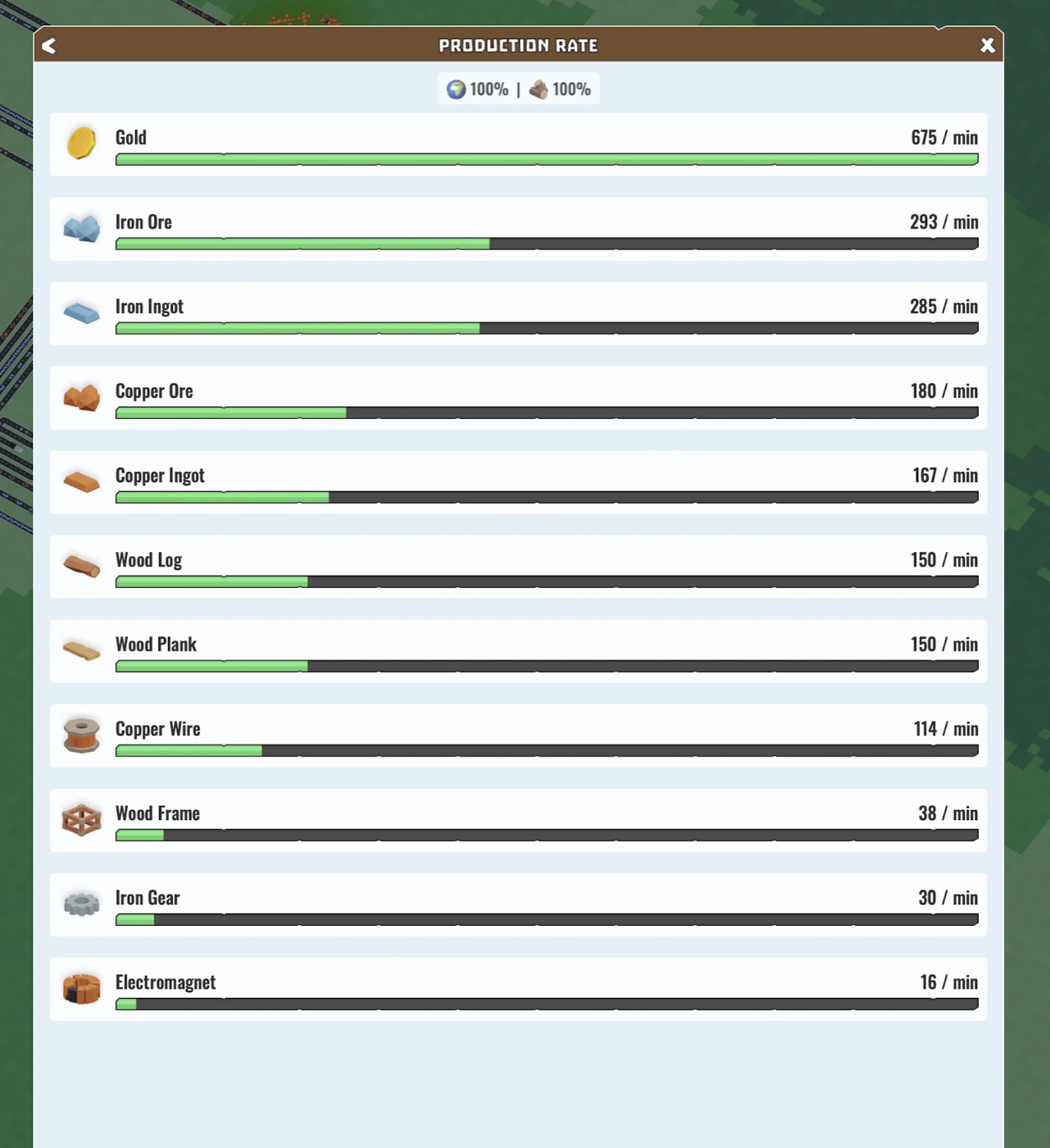
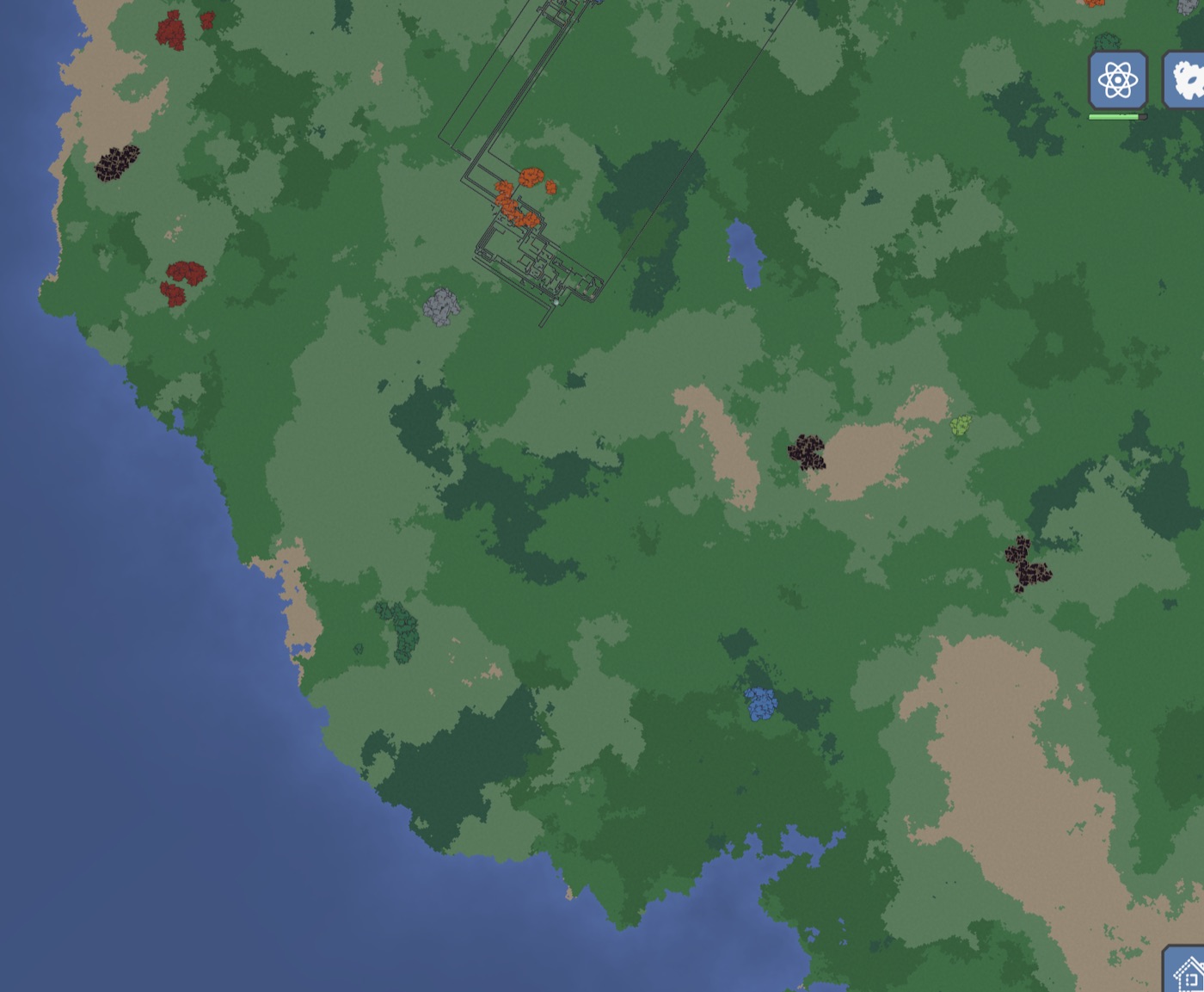
A save turned out to be readable. Every building is a 36-byte record: type, X, Y, direction, tier, item, recipe, and pointers to its inventory. Research progress sits in its own section, with a count of how many of each item has been delivered. Items lying on belts are stored by position, not by which belt they are on. That last fact mattered later.
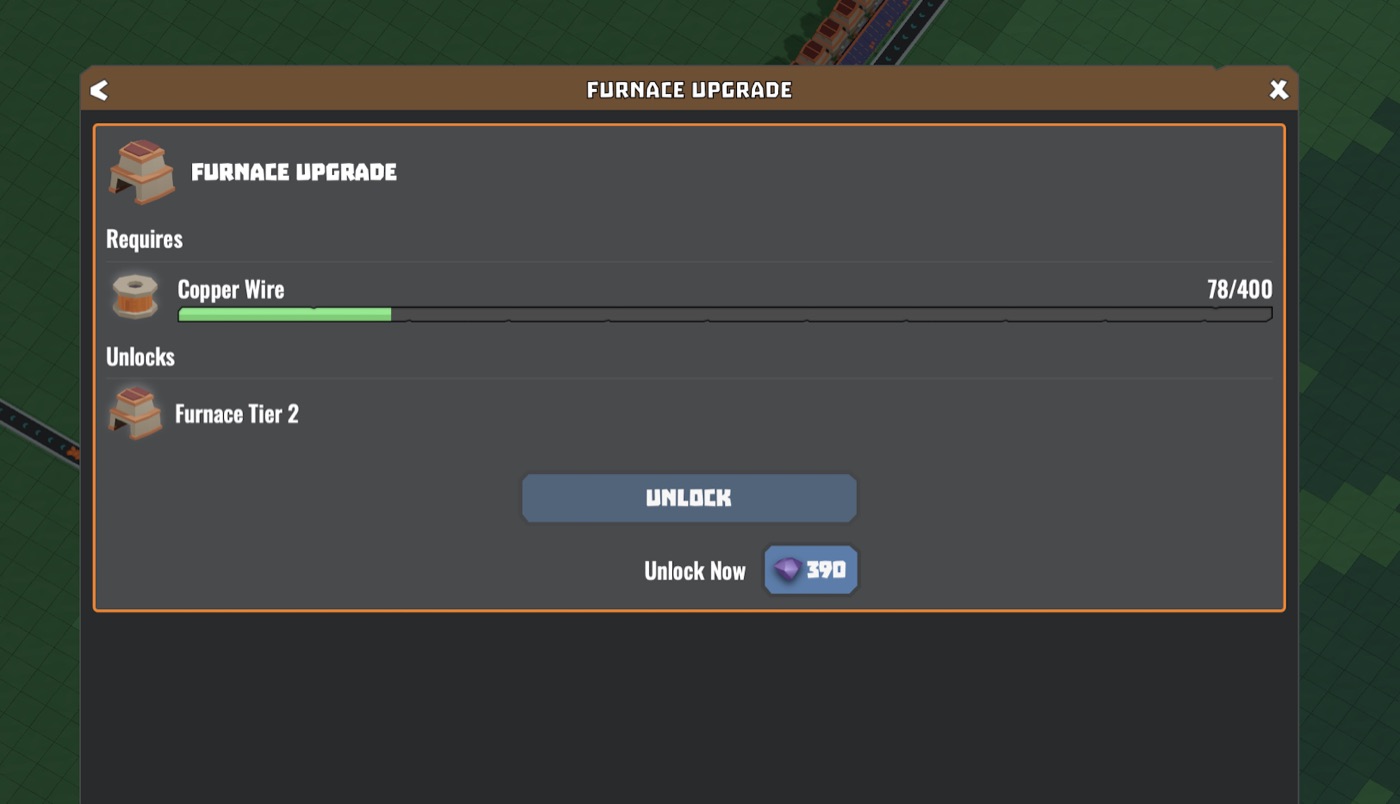
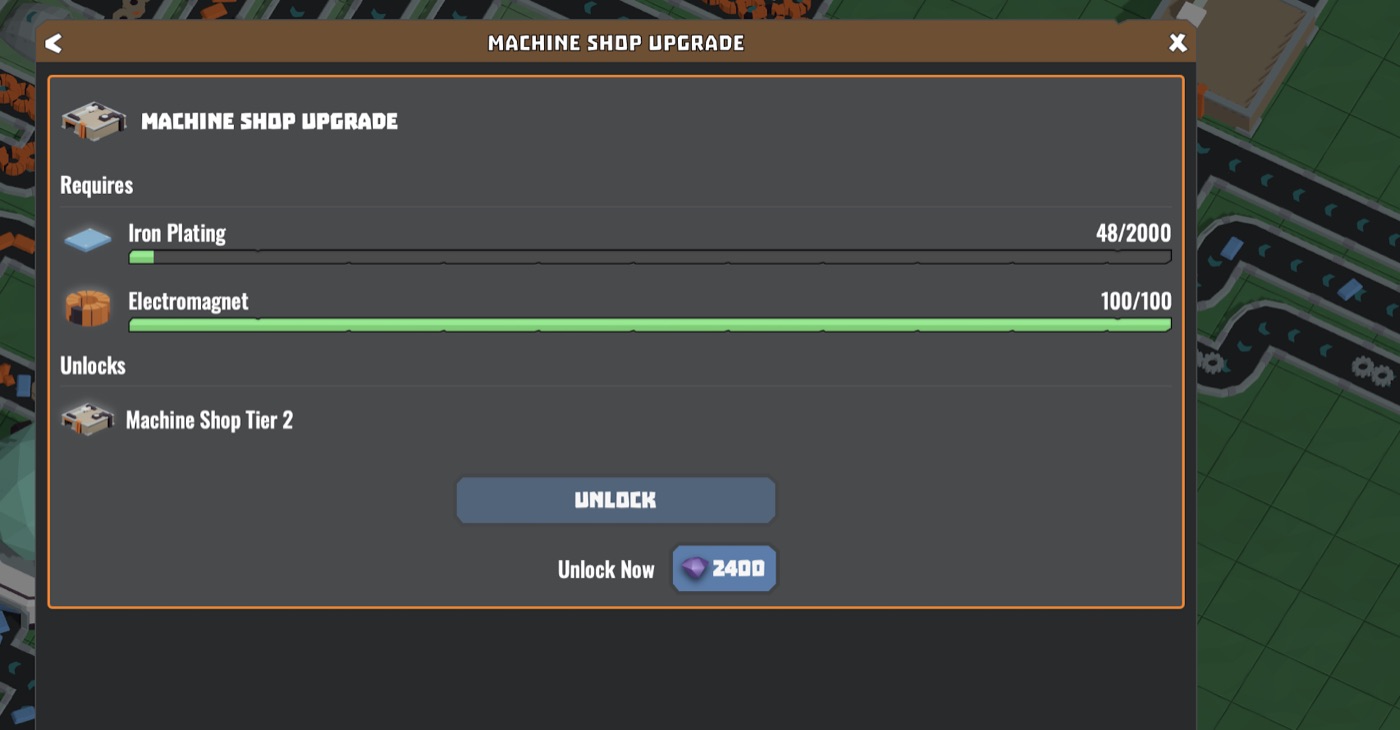
With that, the agent could check what research needed and whether anything was actually reaching the lab.
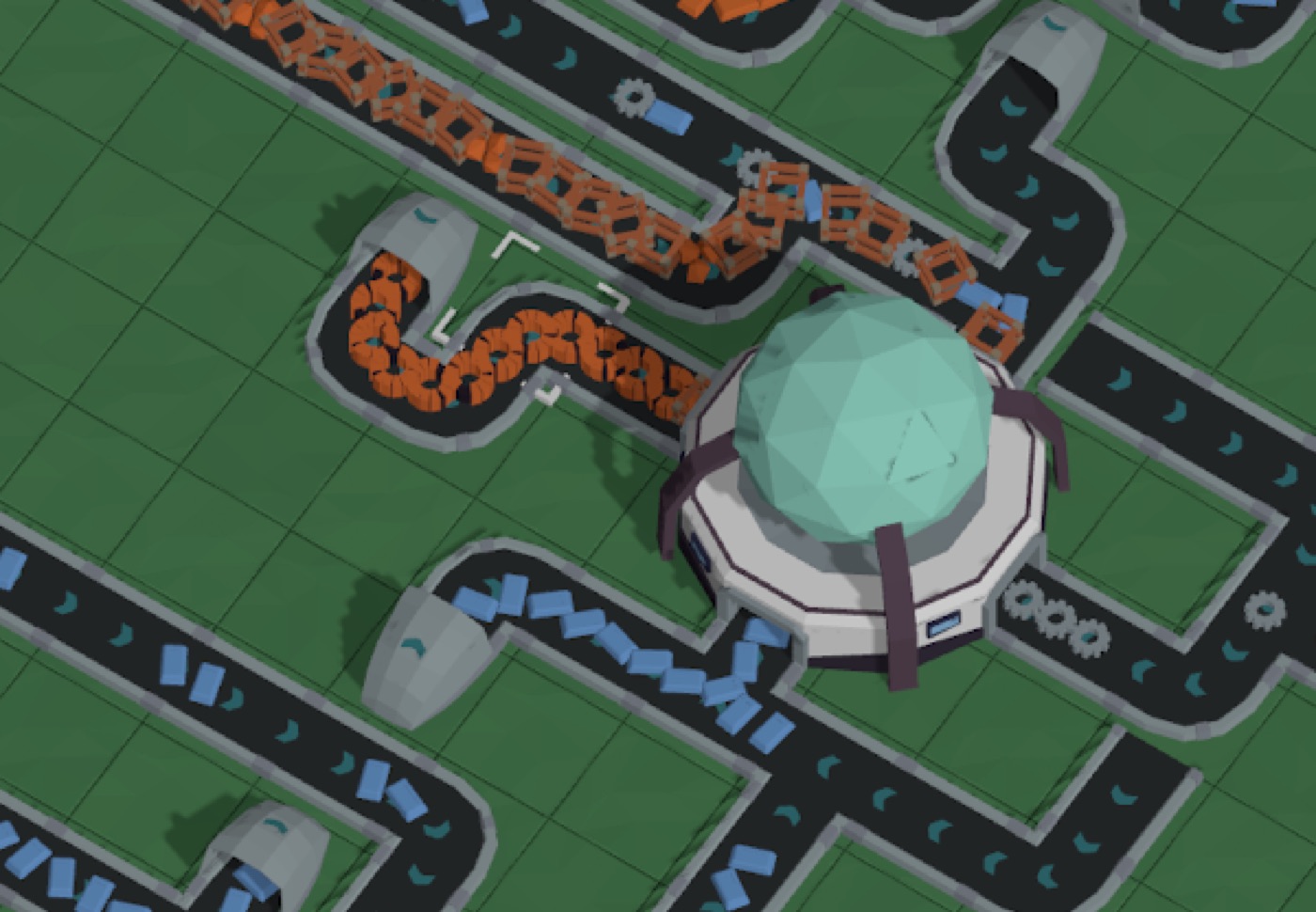
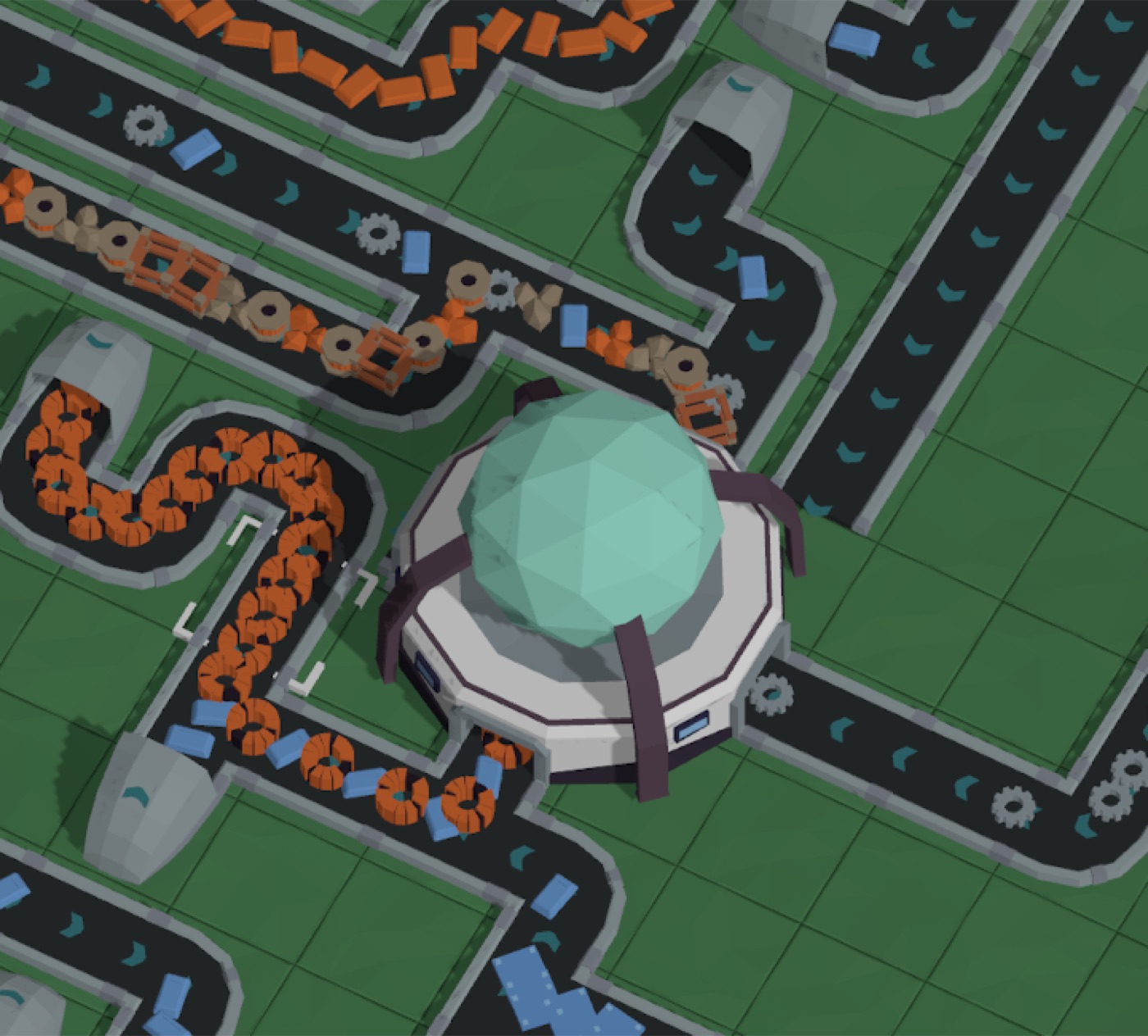
Sheet 03 Gears from everywhere
Dozens of iron deposits had extractors on them and nowhere to send ore.
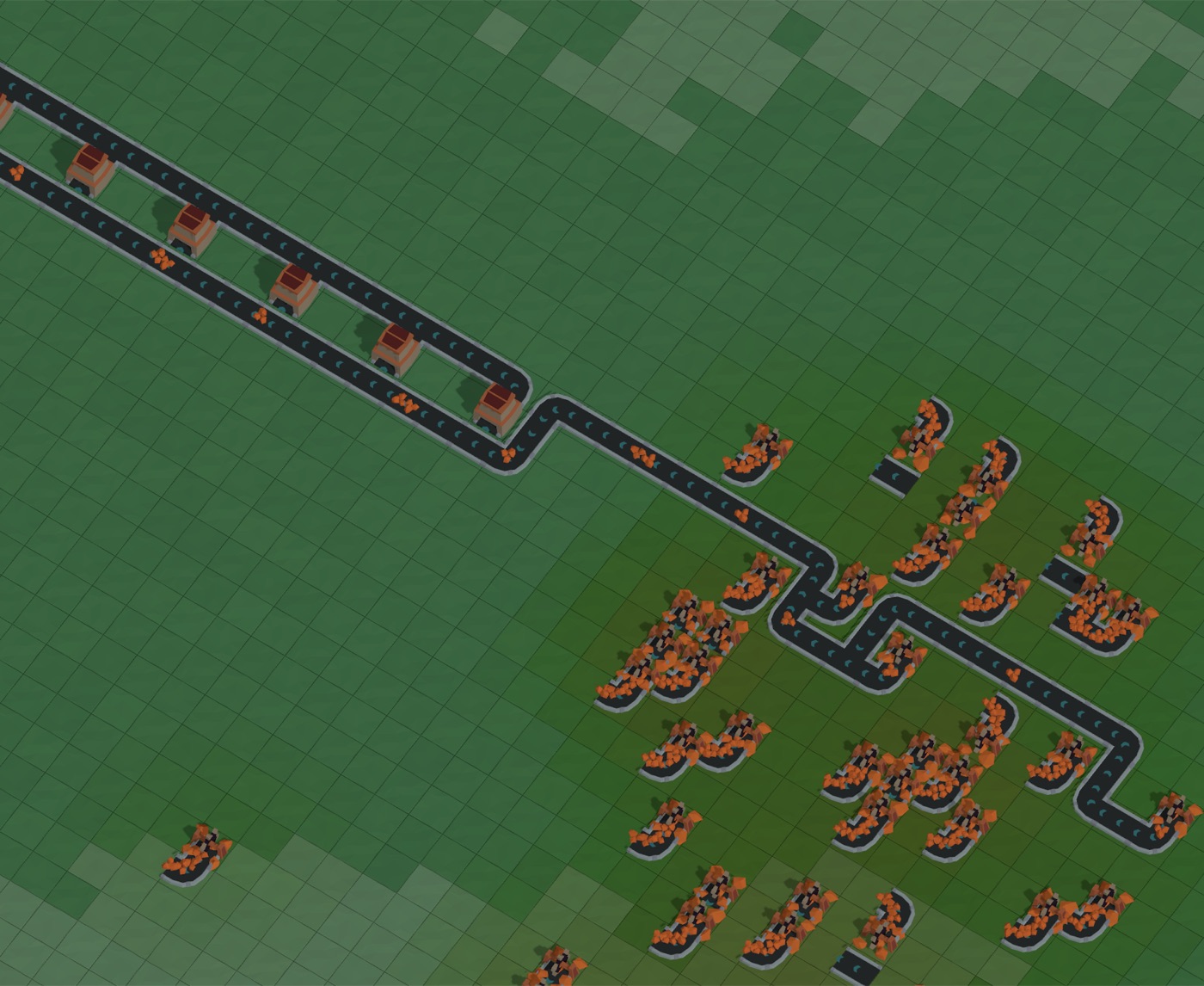
The first answer (World 5) connected every deposit to one shared trunk running into furnaces, gear workshops and a new lab. On paper, it took gears into labs from about 110 to about 465 a minute. In the game it jammed.
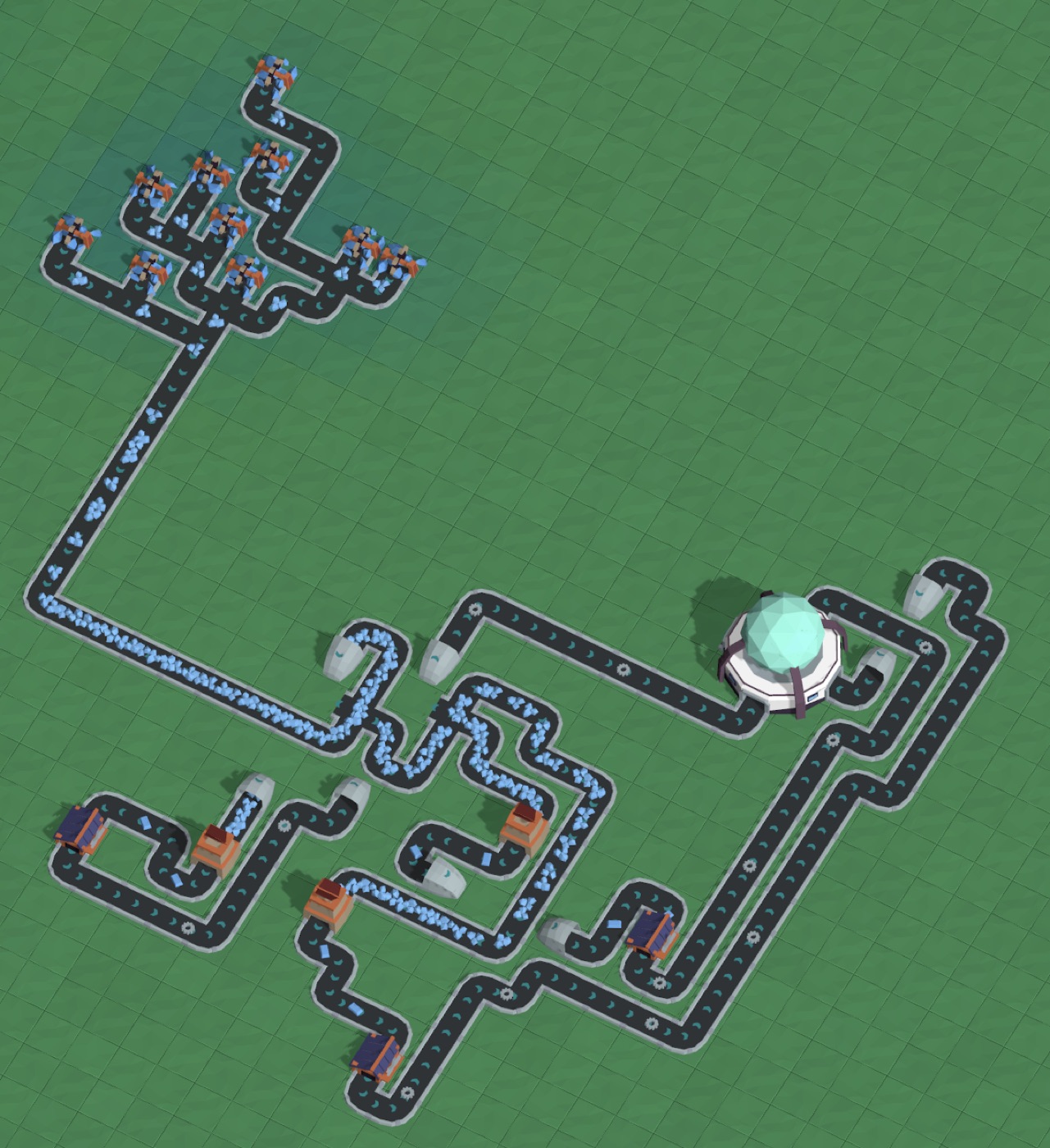
the trick is to connect the exact number of inputs a unit can process into it. also use the maximum level of units— me, looking at plate 8
So the next version (Worlds 6 and 7) became trees: a fixed number of extractors per furnace, one workshop per furnace, everything at the highest tier unlocked. The ratios were right in principle. But each branch was placed wherever there was room, with belts pathfinding around everything placed before them.
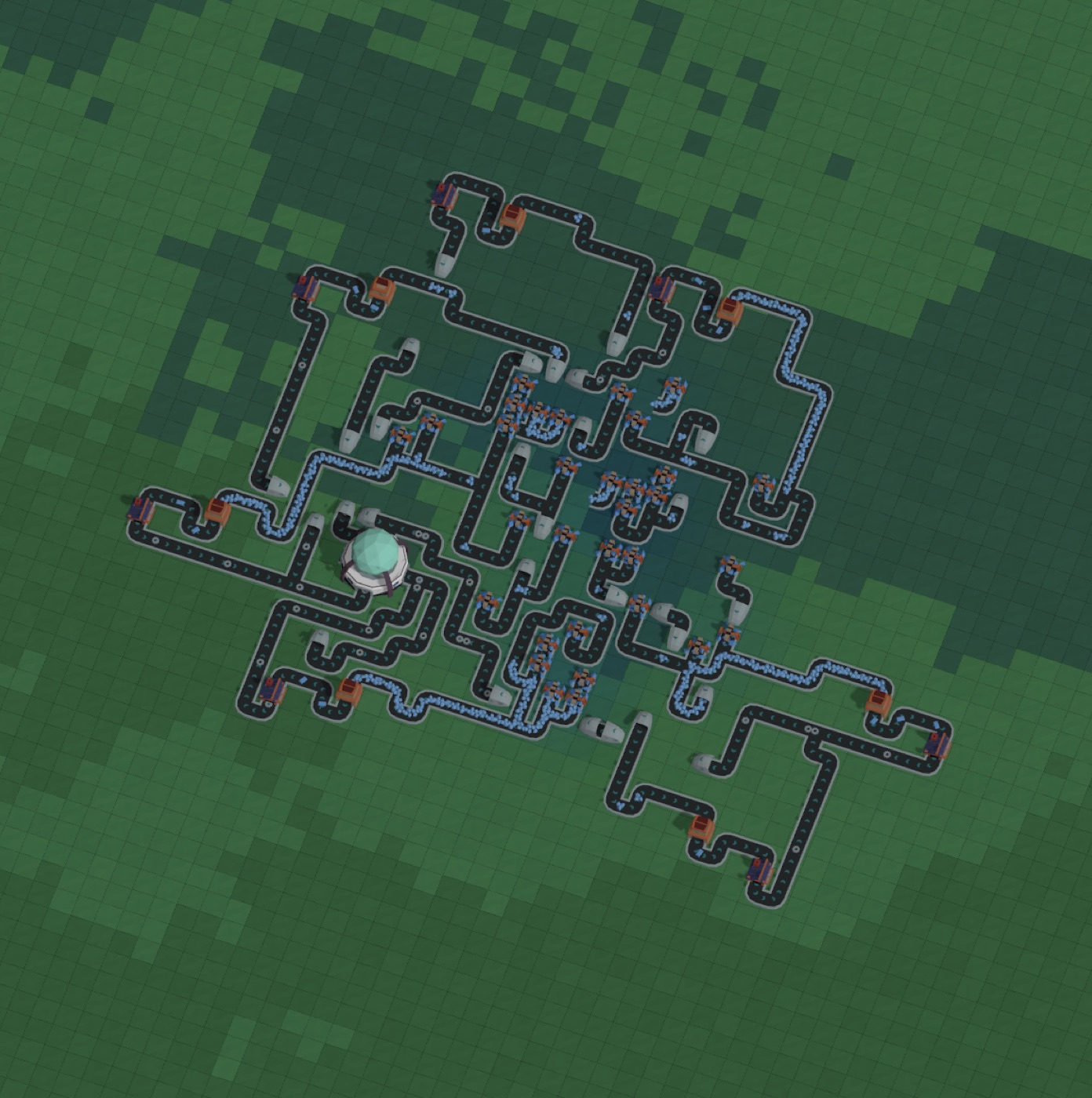
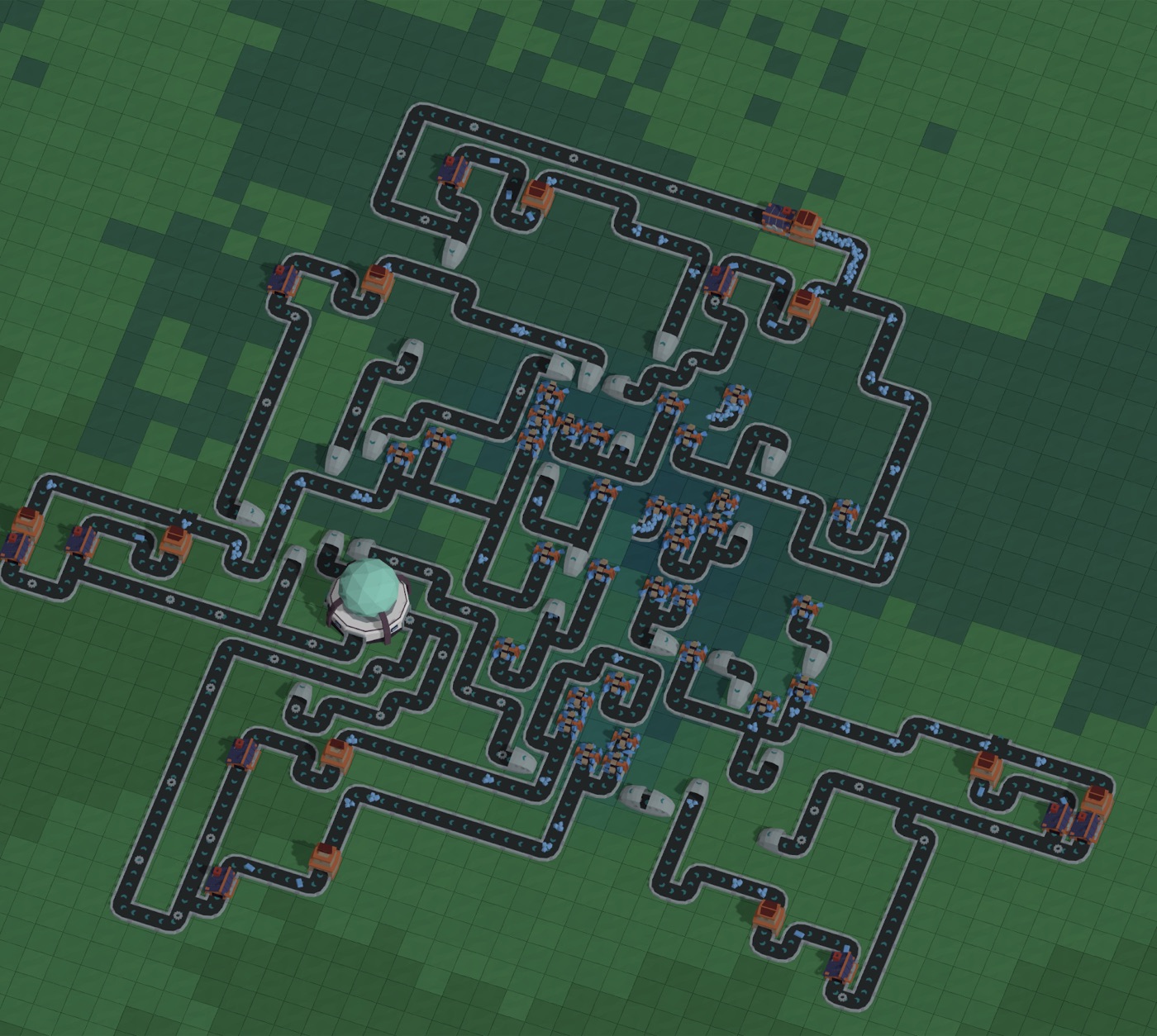
i would expect an ideal build to look like an array of workshops and furnaces, fed from neatly organised belts.— me, looking at plate 9
The hand fix gave a real number the save could not: a tier-2 extractor makes about three times as much as a tier-1 one, so a tier-2 furnace takes two of them. The agent used that as its sizing rule from then on.
Sheet 04 Deletion, then the array
A neat layout needs empty ground, and the old lines were in the way. So the agent learned to delete. A deleted building's record is removed and every pointer in the file is shifted to match. Any item lying within half a tile of it is removed too, which works because items are stored by position. It was tested on a throwaway copy first: the game loaded it, and the removed buildings were still gone after the game saved it again.
Then every gear line it had built since World 4 was deleted, 5,136 buildings in all, and rebuilt to one pattern:
Every block has one straight ore bus carrying at most one belt of ore (16 tier-2 extractors). Each column on the bus has a splitter feeding a furnace on each side. Behind each furnace is a gear workshop, then a straight gear bus to the nearest lab.
Sheet 05 Ledger
Gear rates are the agent's estimates from the saved layout, not measurements. The rate model got better along the way (it learned that a full machine stops taking items), so read the trend, not the exact numbers.
| World | What changed | Buildings | Gears / min (est.) |
|---|---|---|---|
| 4 | My hand edits: a second lab, tier-2 upgrades. The baseline. | 9,935 | ~110 |
| 5 | Shared trunks at 11 iron deposits, 11 new labs | 12,868 | ~465 |
| 6 | Trees instead: 63 branches, all tier 2 | 12,905 | ~1,258 |
| 7 | Everything upgraded to tier 2; 9 more deposits | 13,492 | ~1,384 |
| 8 | 50 extra furnace + workshop pairs on jammed feeds | 15,134 | ~2,403 |
| 9 | First array block: stone → sand → silicon | 15,246 | ~2,403 |
| 10 | 5,136 old buildings deleted, 25 iron array blocks built | 13,005 | ~2,666 |
Research progress in the same stretch: Belt Speed IV, V and VI completed. Belt Speed VII had 8,101 gears delivered at the last save.
Sheet 06 The worlds, as the game saw them
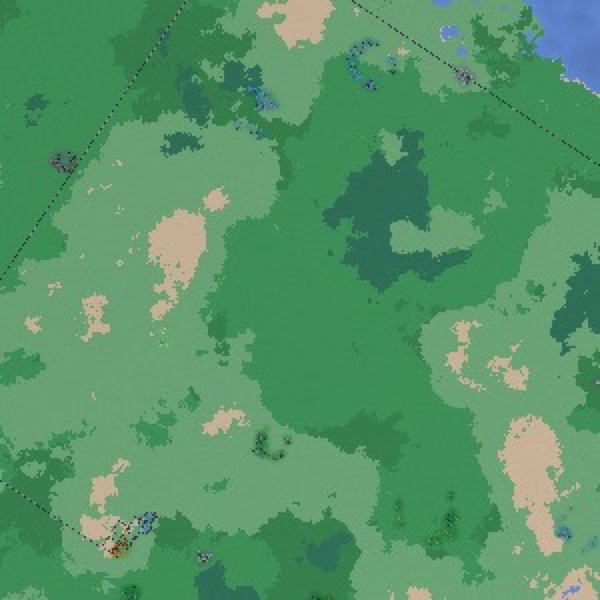
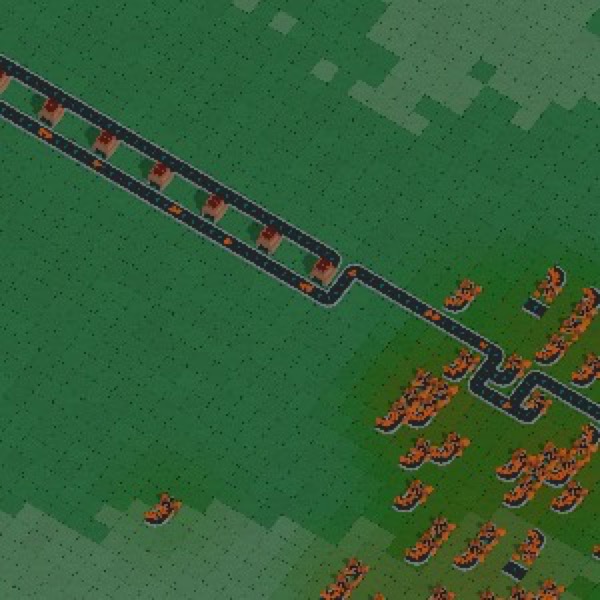
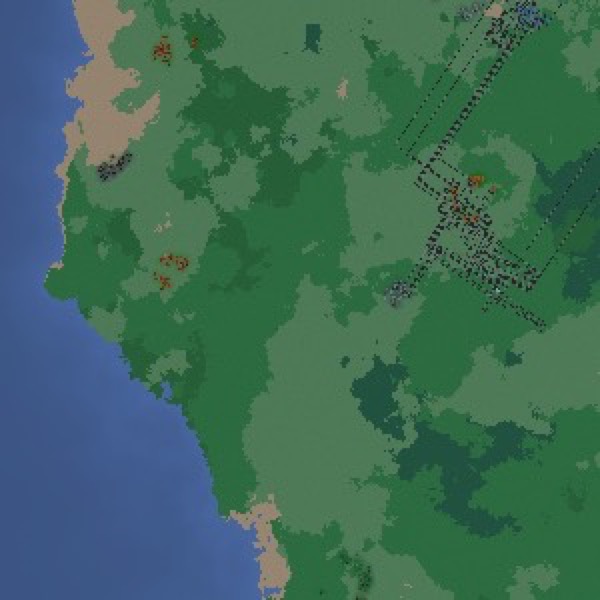
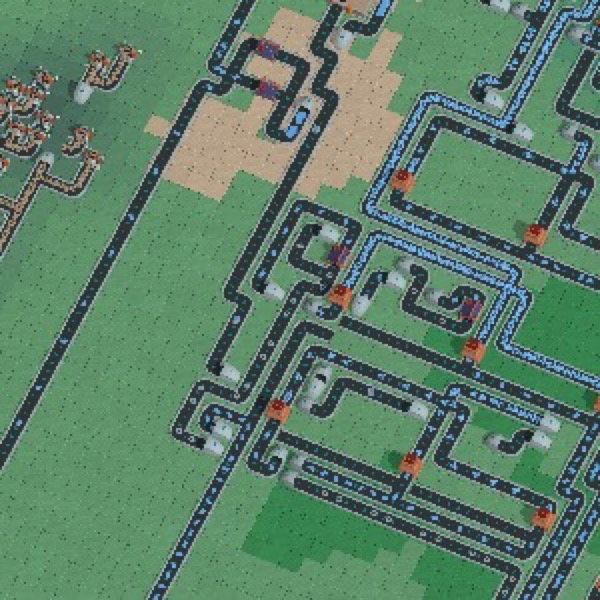
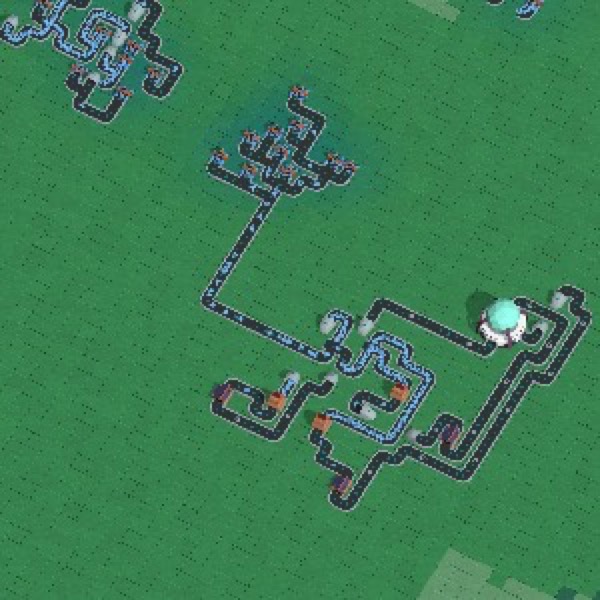
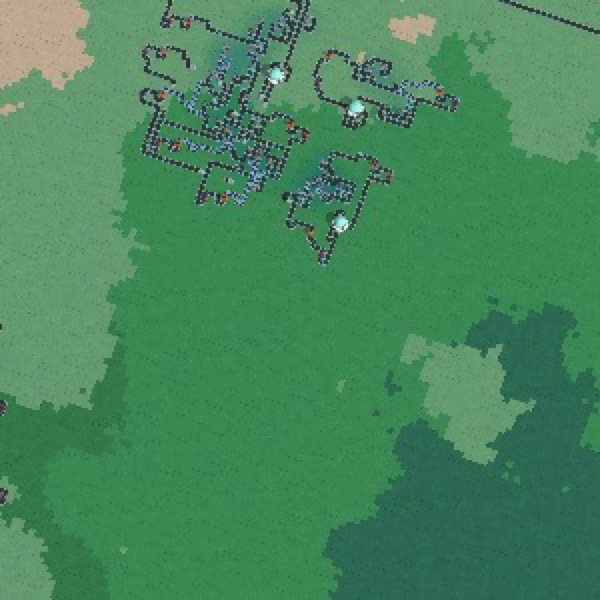
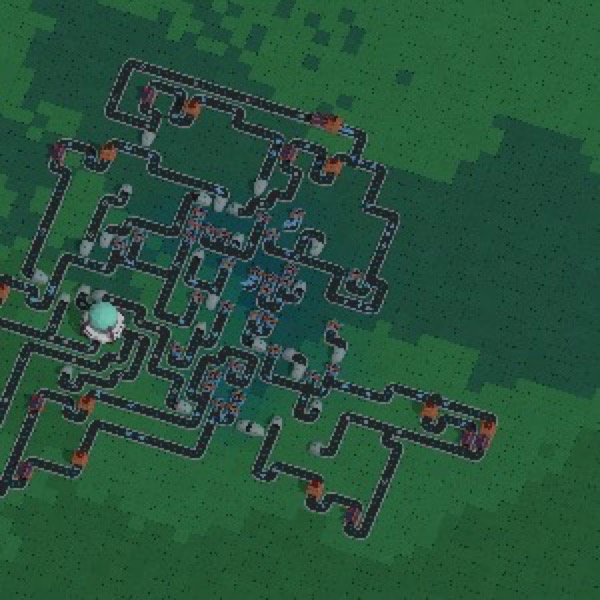
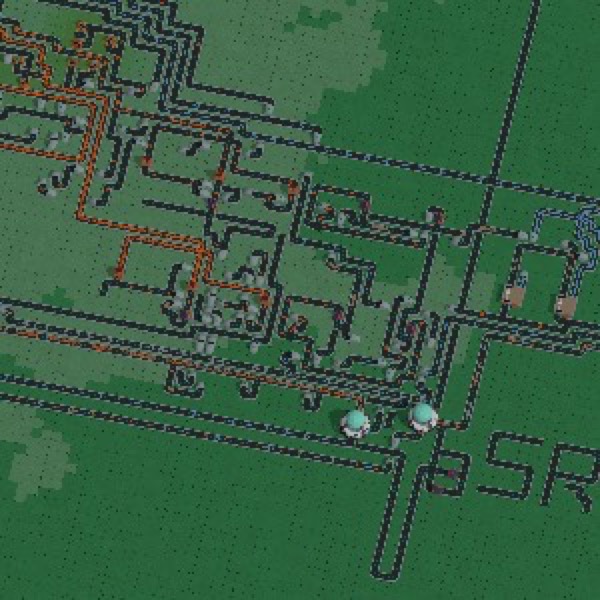
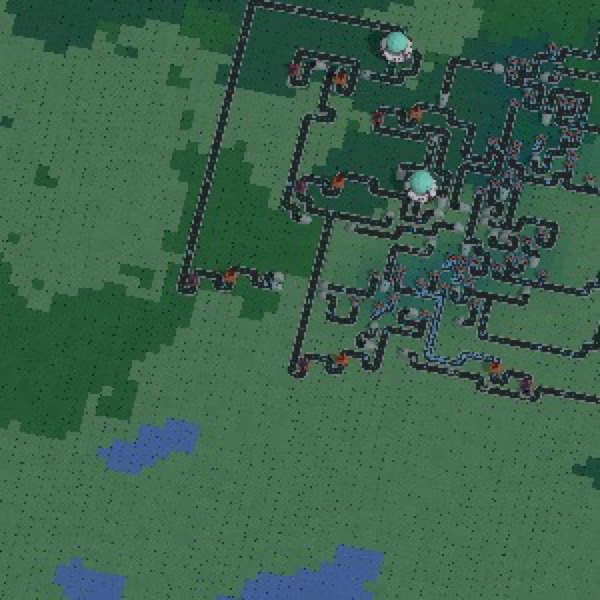
Each save carries a thumbnail of wherever the camera last was.
Sheet 07 Next
Load World 10 and see whether the blocks run as cleanly as they look on paper. Then keep feeding gears until belt speed is as high as it goes before Earth Tokens. After that, the same block pattern goes to everything else the token needs: silicon, logic circuits and the rest of the tree.