On my first computer, I had a whole drive for putting my random hacks. It was D:\WORKSTATION.
I vaguely remember the contents of it. Since at that point I did not actively write computer programs for myself, it should have been various programs I found on CDs.
I remember it was important for me — it was the first thing I backed up on my hard disk.
Having eventually found Linux, this became ~/workstation. At some point when I found out about fstab, also /workstation.
For the last few computers I remember, this is ~/Code. On my personal laptops the folder mostly had repos. On work laptops ~/Code/srih4ri for private repos.
This folder that once contained software off CDs from friends and computer magazines is now full of custom written software.
Many Python scripts, some web apps, some API clients, some Telegram bots, some data research, some PDF poster making — a mixed bag of software spread across languages, for varied use cases, platforms and scale. The only thing common to them is me — software I generated when I had a need, or just a whim and some free time.
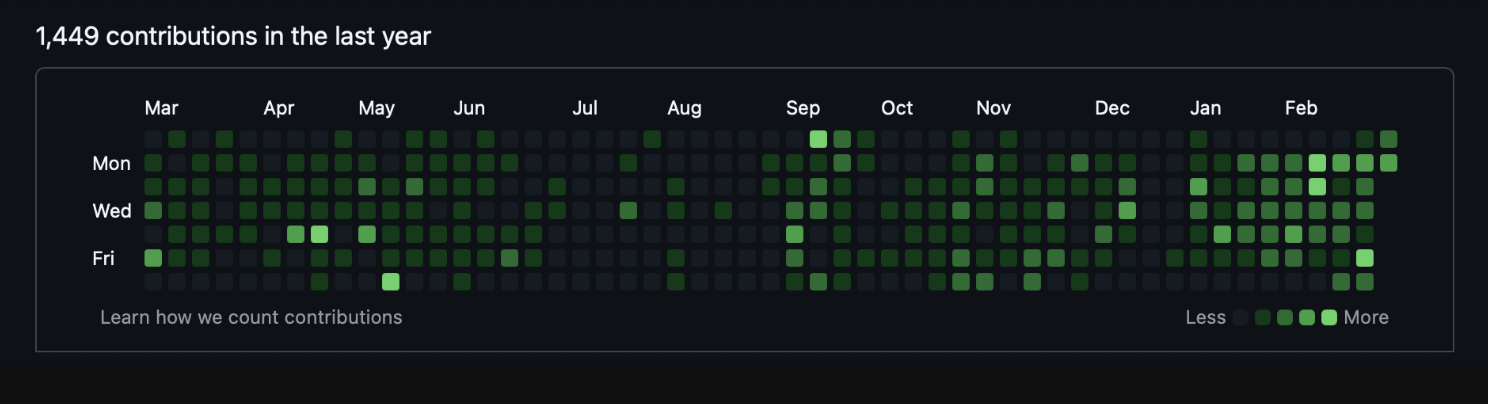
I generate a lot more code
The idea-to-execution phase is now compressed to near zero compared to what it was before. The expense has been close to a euro per day for my Claude Code subscription.
The software I generate has mostly reflected my needs, but also the tools and frameworks I use at work.
Where does this go
When I saw myself generating so much software in a short period, I tried to imagine where this goes. Almost a year ago, I would have never imagined I would be doing what I am doing now. That made me think: what would I be doing a year from now? The speed and accuracy of generating software is only going to increase — I would produce more and more custom software.
I then thought about what this would mean for businesses that require software. Most businesses need software. You could argue that as a software professional, most businesses I have exposure to are software-heavy — but then again, everyone uses computers, tablets, kiosks. A business making an e-commerce app and a business running a warehouse both need software. My guess is that all of them are going to need operators: operators of AI agents, the human in the loop. What that human does is going to change.
Here is what I think happens next.
Speculation 1: The backoffice software finally gets some love
Companies usually vendor their software not because only the vendor can write it, but because the vendor can be held liable for its maintenance and correctness. When software is vendored, the company’s engineering resources can be spent elsewhere generating revenue directly. However, a lot of times companies end up needing software that is not vendored — back office tooling, internal dashboards, operations scripts. For such needs, the engineering team enthusiastically picks up and says “we can write a web app for this” or “we can write a script for this”. Once that software is built and requirements evolve, or bugs appear after first use, the team’s attention moves on. Bug fixes and maintenance end up in long queues because engineers are busy building something critical. The back office software isn’t the critical path of delivering value to customers, so it never gets attention. The operations team lives in pain using clunky old software nobody has time to fix.
This is going to change. The cost of implementing software requirements is drastically reduced. If you have an idea and an operator sensible enough to describe it to AI with enough context, AI can generate and refine the code. Unmaintained internal software is going to get a facelift. Anyone wanting bots, scripts, or small dashboards just needs to know how to use AI — or convince the engineering team to give them one engineer’s time instead of the previously requested five. There is a much better chance of getting things done and software fixed.
All those almost-programmers who ended up working in Operations, who knew the faults of the backoffice software better than anyone, who filed tickets and waited — they can now take things into their own hands.
Speculation 2: software stops being a product
What if this becomes commonplace, and instead of phones installing apps from a play store, we get phones with an on-device LLM — where you describe what you need and the software is generated for you? We usually think of goods as first produced in a factory, then sold at retail, a model that replaced the old way of production where you presented your requirement and someone made it for you. Counterintuitively, we seem to be going back to that. Instead of machines producing software packaged as a license or a CD, you will have software written for you instantly.
Not everyone is a programmer, but far too many people enjoy customising their phones for the fun of it. They are going to get more power now — bespoke widgets, maybe even bespoke apps.